
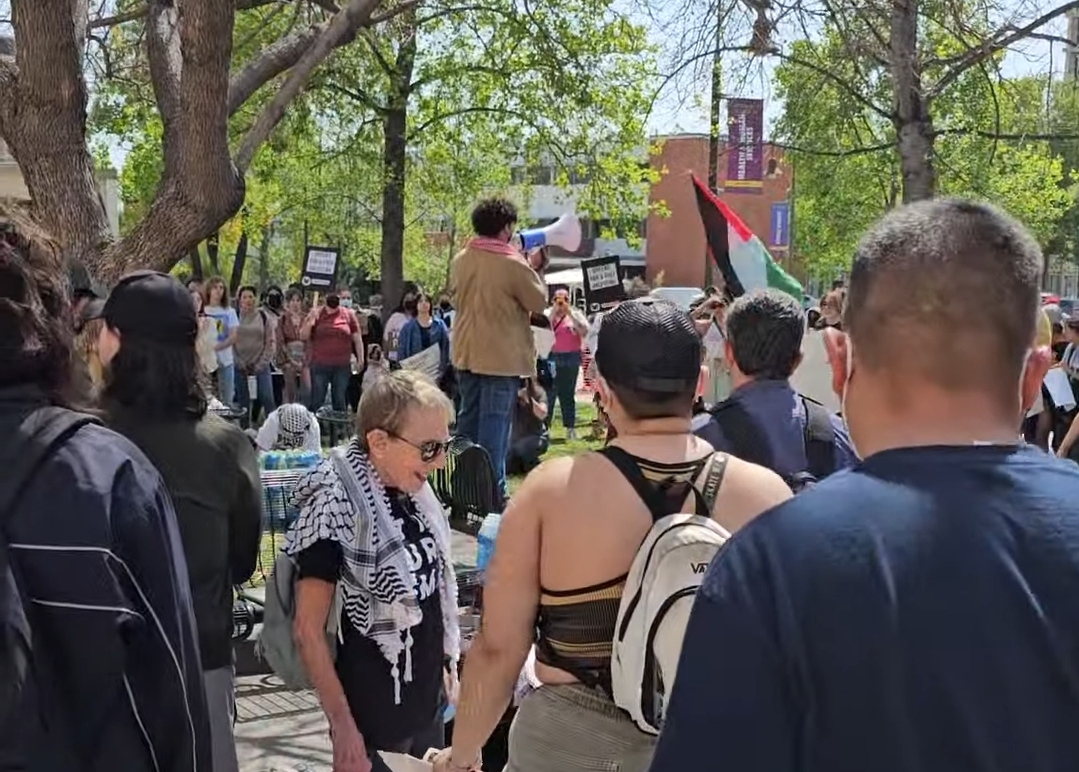
Monday, July 1st, members of the Gaza Solidarity Encampment at Cal State University – Los Angeles staged a die-in at the Student Union building to pressure the administration to divest from Israel and remind campus that there is no business as usual while Zionist occupation forces enter the 268th day of genocide in Gaza.
The Students for Justice in Palestine at CSULA’s comprehensive demands included fully divesting all tuition dollars and other CSU assets from Israeli weapons, surveillance tech, and other companies in occupied Palestine.
The administration called in more than 70 cops with guns and heavy machinery to sweep the encampment June 16th without prior notice, leaving those inside five minutes to gather their things.
This came a week after students occupied the Student Services building for eight hours on Wednesday, June 12th to demand the University President continue negotiations. Encampment members reported that the President had stalled negotiations for weeks.
The first thing I remember walking into camp was, “this place feels homey.” Behind the wall of wooden pallets, painted with “Free Palestine” and “Land Back,” a sliding wooden door opened up to the altar, a memorial statue repurposed with framed photos of Palestinian martyrs, covered with flowers and prayers. One camp member would later tell me that a memorial brick he had bought for his late father, a CSULA alumnus, was paved in the pathway right next to the altar. Right away, somebody asked my preferred name, and offered to show a small tour of the community guidelines, the med tent, and where to find food and other supplies inside.
It became clear that people stepped up to help without being asked. Somebody was patching up part of the wall. Tiktoker Jose Caba, who came to spend the night when the camp was expanding said that, while he came hoping to do “something big,” realized that pitching in by holding a lamp while the walls were being rebuilt at night, or turning all the lamps off in the morning after sunrise, were more than enough to be a part of a community project like the encampment.
“I feel part of a community here and I’m just so happy to be here,” said one member of camp. They described protesting in the streets throughout the first six months of the genocide in Gaza, but “it wasn’t necessarily a consistent source of community.” Participating in the encampment “has been so powerful.”
There were different layers of involvement. Members of the community in Monterey Park or the surrounding San Gabriel Valley area donated food or supplies from a daily updated list posted in the CSULA SJP Instagram bio. Other students, faculty, or community members came through in the afternoon to share food, attend teach-ins, or just hang out. One mom brought her kids to draw chalk on the sidewalk inside the wood pallet walls. At the core were the student organizers and folks staying the night in tents.
Food and supply donations came from the surrounding community. Folks signed up for food donations on the Meal Train, and answered calls for other supplies like ice, energy drinks, and tents. On a given day, there was almost always somebody new bringing hot food and serving the camp on paper plates, and if someone was looking, there was always a meal.
Since there was so much free time at the encampment, speakers came to do teach-ins. One was a politics teacher from Guatemala who spoke about anarchism and what a world without borders would look like. A Palestinian woman led a discussion about the right to return and resettle and the push to return the homeland Palestinian hands. They were followed by a queer yoga instructor who taught an hour long class.
The encampments and refugee zones in South Gaza obviously experience dramatically more violent conditions, but the solidarity within the encampment can push us to organize. Omar and Herz, @omarherzshow on instagram, quickly gained over a million followers showing their daily life in Gaza. They show bombed buildings, destroyed cars, and tents lining the sidewalk alongside retrieving frozen meat from a friend’s freezer, borrowing a phone charging station, or a friend offering lunch.
“Spaces like these are rare,” says Will Sens, who resided atthe Echo Park Lake encampment before it was violently swept in March of 2021. “We had a community kitchen, people would drop off provisions.I had a camp stove and I would cook for whoever was around.” The camp had a shower, a community garden growing peppers, squashes, and other vegetables. “People naturally take care of each other in spaces like these,” Will says. It would “bring out the best in the group,” you’d ask yourself “what am I good at?” and “work synergistically.” When you live close with your neighbors, the capitalist myths of individualism really disappear.
Students occupy campuses to reclaim the use of their tuition money, while Gazan families stand their ground in their homeland. It’s about returning land and resources to the people who deserve them. The empty skyscrapers Downtown sit waiting to put a roof over the head of unhoused folks awaiting permanent housing. At the encampment in May, Xipe Totec–the Los Angeles group named after the Aztec god of rebirth cycles and agriculture–danced a traditional Aztec piece from South Mexico, and reminded us that this is native land cared for by the Tongva.
https://www.instagram.com/p/C7PkI1oSmVC/
https://docs.google.com/document/d/1KToxN7ZkWYRMxCXNdnzPcP0EtXVeFV9K/edit
https://www.instagram.com/csuladivest
https://www.instagram.com/encampment.tales
Omar / Herz
https://www.instagram.com/p/C7SH7NGgiQ0/
https://www.instagram.com/p/C7SH7NGgiQ0/
https://www.instagram.com/p/C7PiJvhgpMd/
Discover more from Lavender Press
Subscribe to get the latest posts sent to your email.

