
Edit: the original article misused ‘personal’ and ‘impersonal’ pronoun
Over time the meaning of ‘pronouns’ has been rather lost to time, emptied of its original grammatical meaning, hollowed out, and turned into something which, allegedly, only trans people have. The ease with which this process has played out has left some people astonished that so many people don’t seem to know what a pronoun actually is, but the facts reveal a concerning epidemic that too often goes under-reported: illiteracy. According to a study conducted by the Board of Education, less than half of all Americans can read above a 6’th grade level. Depending on the state, between 10% and 30% of Americans are hardly even literate at all and struggle to read at an elementary level. For one of the wealthiest countries in the world, this is a clear absurdity: why does our educational system keep failing us so dramatically? We investigate this very question.
In the interests of making up for the failures of our educational system, and in the interests of fostering unity, let’s first establish: what is a pronoun? A pronoun is any word which refers to a person anonymously–as in, without using their name. In fact, just then in that prior sentence, ‘their’ was a pronoun which referred to a hypothetical person. Pronouns can be first person, as in describing oneself or a group that one is a member of. For example, ‘I,’ ‘me,’ ‘we,’ and ‘us’ are all 1st person pronouns. ‘I’ differs from ‘me’ in the same way that ‘we’ differs from ‘us’; the former are subjects in a sentence (person who does the action) and the latter are objects in a sentence (person who is acted upon). For example: “I drove to work” vs “Cindy drove me to work.” Pronouns can also be 2nd or 3rd person, describing another person, or a group of people separate from oneself; for example, ‘you,’ is a 2nd person pronoun and ‘it,’ ‘they,’ ‘he,’ and ‘she’ are all 3rd person pronouns. These pronouns are unique compared to 1st person pronouns because they not only have case (subject vs object) and number (single vs multiple), but also gender, with ‘you,’ ‘it,’ and ‘they’ being gender neutral, and ‘he’ and ‘she’ being masculine and feminine, respectively. Prescriptively speaking, it is technically bad grammar to use ‘they’ as a gender neutral, singular pronoun; however, descriptively speaking, most people unconsciously do it all the time and have done so for centuries. For example, if I were speaking in third person about someone whose gender I don’t know or care to express, I might say something like: “they didn’t look both ways before crossing the street” or “I saw them get hit by a car.” So that’s all a pronoun is: a way to refer to a person without using their name. Not that this is some kind of secret grammatical knowledge which unlocks the powers of the bourgeoisie, but it’s a technical detail, which, insofar as it isn’t productive to capital, might not have been taught even though we use pronouns to communicate every day. The truth is that all people actually “have” pronouns the same way that trans people do; it’s just easier for our ruling class to make a big to-do about it when we’re kept ignorant and divided. But why is ignorance and division in the interests of our ruling class?
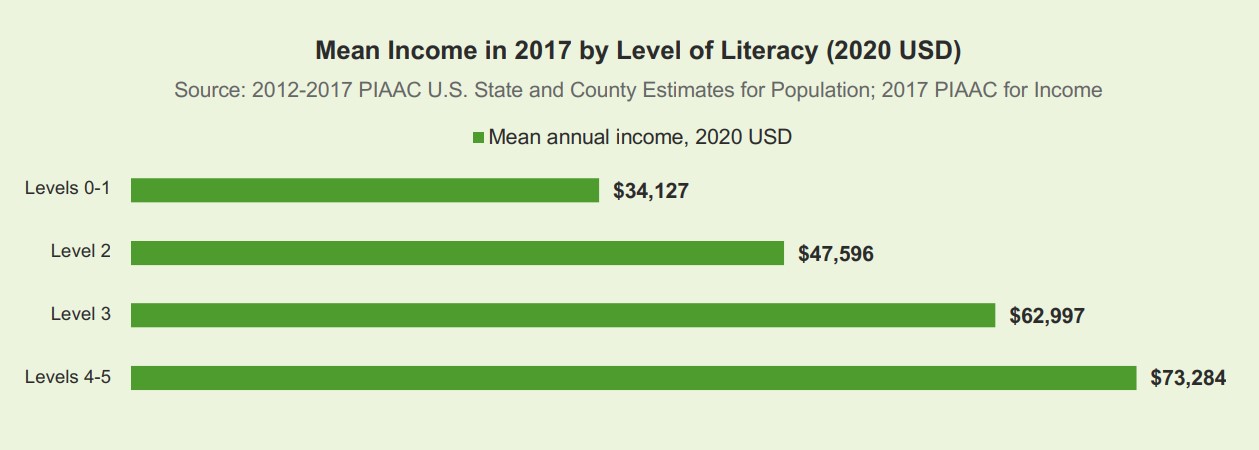
There are a couple reasons why education under capitalist states tends to produce low levels of education on average, with one of the key insights being that there’s actually two distinct educational systems: there’s the educational system for the working class and a separate, private educational system for the wealthy. One of the unique characteristics of capitalism as compared to prior modes of production is that the wage laborer is most useful and most efficient with some level of education because the complex jobs of modern industry require a flexible and technical skill set. However, our ruling class will not voluntarily invest in our education beyond the critical skills that make someone a productive wage laborer. There are two primary reasons why: firstly, an oppressed population which is able to think critically will inevitably come to class consciousness and turn on the ruling class; secondly, information itself becomes a valuable commodity which would lose its value if it were easily accessible. In short there’s both an economic incentive (motivated by money) and a political incentive (motivated by power and control). The capitalist system of education simply becomes another instrument by which to reproduce class domination by teaching the working class how to work and the ruling class how to rule. In other words, it’s no mere accident that the working people do not have the same access to education; the division is a method of control. This class disparity becomes all the more obvious when one sees the correlation between income and literacy:

As you can see, the wealthier someone is, the better educated they can become. In fact, the reverse is also true: the better educated someone is, the more easily they can make money. This isn’t only because people can afford to gain a degree in specialized fields, though that’s certainly true; a better educated population is actually more productive across the board. The same study mentioned earlier has this to say on the subject:
“Eradicating illiteracy would have enormous economic benefits. This analysis finds that getting all U.S. adults to at least a Level 3 of literacy proficiency would generate an additional $2.2 trillion in annual income for the country.”
Assessing the Economic Gains of Eradicating Illiteracy Nationally and Regionally in the United States
In a rational economic system, we would obviously invest in the education of the people, not only because it would benefit them, but because it would promote the growth of the economy. And yet, we routinely find that irrationality is a defining feature of capitalist economy: by the very nature of the means of production and wealth being centralized in the hands of a few competing people, private enterprises are compelled to make greedy and self-serving decisions at the expense of the rest of society. Indeed, only when the means of production are socialized can the economy be organized by rational principles, only then can investment be guided by the principle of maximizing social utility rather than private profit.
For comparison, the Cuban literacy rate is over 99.75%, in the Democratic People’s Republic of Korea it’s over 98%, in China it’s over 96%, and in Vietnam it’s over 95%. Canada, on the other hand, follows a similar pattern to the US in terms of literacy. Ok, but what about the social-democratic countries of Europe? It is indeed true that some of them have strong literacy rates, so we can see that the mode of production isn’t the sole determining factor in educational quality and literacy; through collective struggle it is indeed possible to compel our ruling class to offer better education as a concession! In short, we must understand that, if left to their own devices for long enough, our ruling class will glut education to only that critical minimum quality that is necessary for production in capitalist economies, but the organized power of the people can overcome this! This is why the ruling class must keep us divided, must keep us ignorant: we can seize power, but only if we do so collectively. Thus, if understanding what a pronoun is helps us to communicate with each other, and therefore helps us to unify, then we think that’s rather important.
Discover more from Lavender Press
Subscribe to get the latest posts sent to your email.

